Why I Stopped Writing Cold DMs and Started Recording Them
Voice messages are the anti-template. Impossible to fake, impossible to ignore. Here's why the approach that doesn't scale actually works.
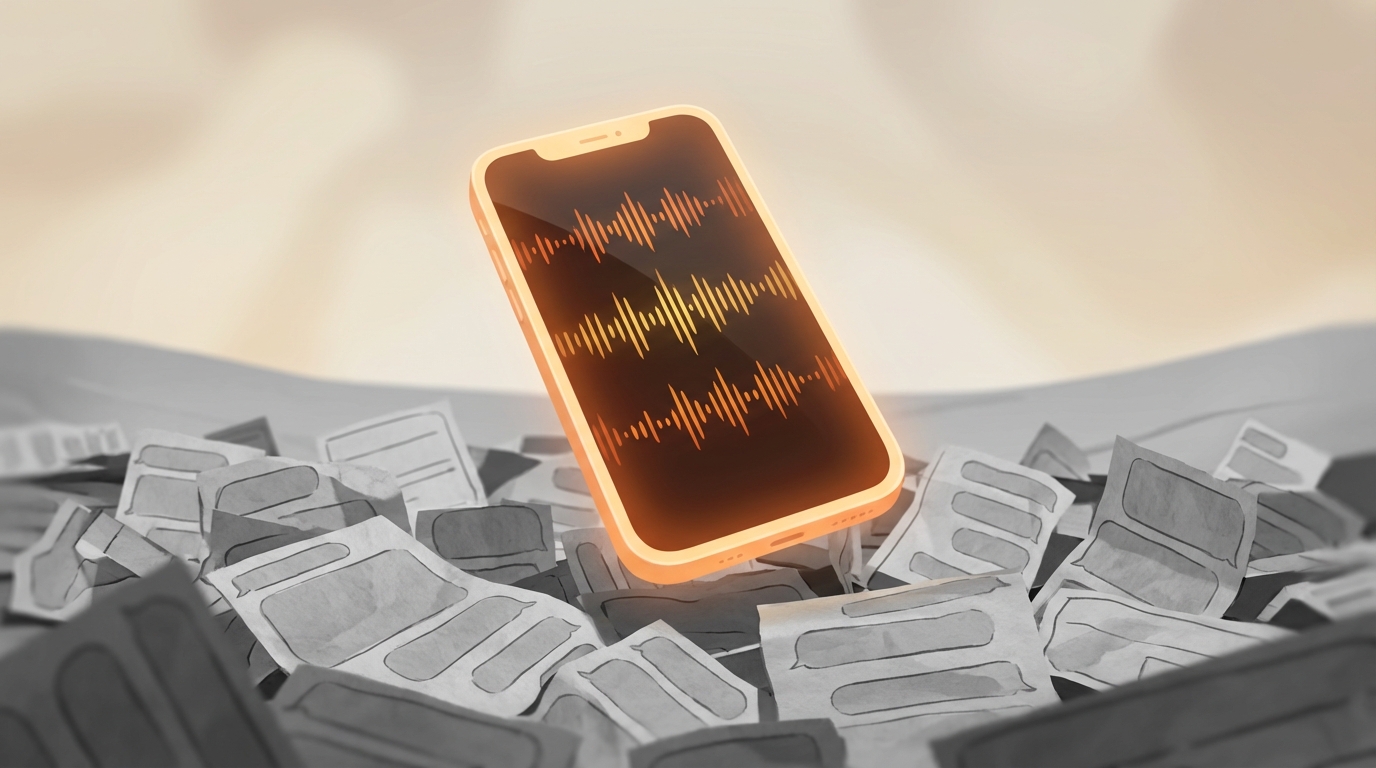
I stopped writing cold DMs.
Now I record them.
The response rate difference isn’t subtle. It’s dramatic enough that I’m not going back.
Text DMs Are Broken
Everyone knows when they’re getting a template. The “I noticed you…” opener. The compliment that could apply to anyone. The transition to a pitch that clearly has nothing to do with the compliment.
We’ve all been on the receiving end. We’ve all hit delete without reading past the first line.
The arms race of “personalization” has made text DMs nearly useless. People have developed immune systems to anything that looks like a sales message. Even genuinely personalized text messages get filtered out because they pattern-match to template.
It’s not that personalization doesn’t work. It’s that text can’t prove personalization anymore. The medium is compromised.
Voice Is Different
You can’t template a voice message. Not really.
Sure, you could read a script. But it would sound like you’re reading a script. The medium exposes the effort level. There’s no hiding behind copy-paste.
When you record a voice message, you have to actually look at the person’s profile. You have to mention something specific. You have to react in real time. The format forces authenticity.
That authenticity is the signal. The recipient knows you spent 20 seconds actually thinking about them. In a world of mass outreach, 20 seconds of genuine attention is remarkable.
The Pattern Interrupt
Nobody sends voice DMs. That alone makes them stand out.
On LinkedIn especially, where everything feels corporate and polished, a voice message is jarring. Not in a bad way. In a “wait, what is this?” way.
Pattern interrupts work. When everyone zigs, zagging gets attention. Voice messages are a zag.
The recipient has to at least listen to know what you’re saying. That’s more engagement than most cold outreach ever gets. And once they’re listening, the human voice creates connection that text can’t match.
The Effort Signal
Here’s the thing about voice messages: they can’t scale.
You can’t send 500 voice DMs a day. You can’t hire a VA to record them for you. You can’t automate the process.
And that’s exactly why they work.
The limitation is the feature. When something can’t scale, it signals investment. The recipient knows you didn’t do this to 50 other people today. That knowledge changes how they receive the message.
Mass outreach works on volume. Personal outreach works on conversion. Voice messages are firmly in the personal category. Lower volume, much higher response rate.
What Actually Happens
A typical voice DM takes me 20 seconds to record.
I look at their profile. I mention something specific I noticed. I say why I’m reaching out. I keep it casual.
No pitch. No pressure. Just human acknowledgment and a question or observation.
The responses are different from text DM responses. Less defensive. More conversational. People reply like they’re talking to a person, not deflecting a salesperson.
Conversations start that would never have started over text.
The LinkedIn Context
LinkedIn is particularly effective for voice messages because the platform feels so corporate.
Everything on LinkedIn has a sheen of professionalism. Posts are polished. Messages are formal. The whole environment rewards performing success.
A voice message cuts through that. It’s casual in a formal environment. It’s human in a corporate space. The contrast amplifies the impact.
When everything feels like a networking event, being the person who just has a normal conversation stands out.
The Anti-Scale Strategy
Most outreach advice is about scale. More messages. More automation. More volume.
Voice messages are the opposite. They’re about doing fewer things, better.
If you can only send 10 voice DMs a day instead of 100 text DMs, that’s fine. The conversion math often works out the same or better. And the relationships you start are different quality.
Not everyone should do this. If your business model requires massive volume, text outreach might be necessary. But if you’re a consultant, founder, or anyone who wins through relationships, the un-scalable approach often scales better.
How to Actually Do It
Keep it short. 20 seconds max. Any longer and you’re asking too much of someone who didn’t opt in.
Mention something specific. Not a generic compliment. Something that proves you looked. A recent post. A company detail. A shared connection.
Have a point, but don’t pitch. The goal is starting a conversation, not closing a deal. Ask a question. Share an observation. Give them something to respond to.
Sound like yourself. Don’t rehearse. Don’t read. Just talk like you’re leaving a message for someone you know.
That’s it. The approach is simple. The execution requires actually paying attention to the people you’re reaching out to.
Which, when you think about it, is what good sales has always required. Voice messages just make the attention impossible to fake.
Ohad Michaeli
Strategic positioning for Shopify apps
Want more insights like this?
Join Shopify app founders who get actionable positioning and optimization strategies.