Your Reviews. Gone. Just Like That.
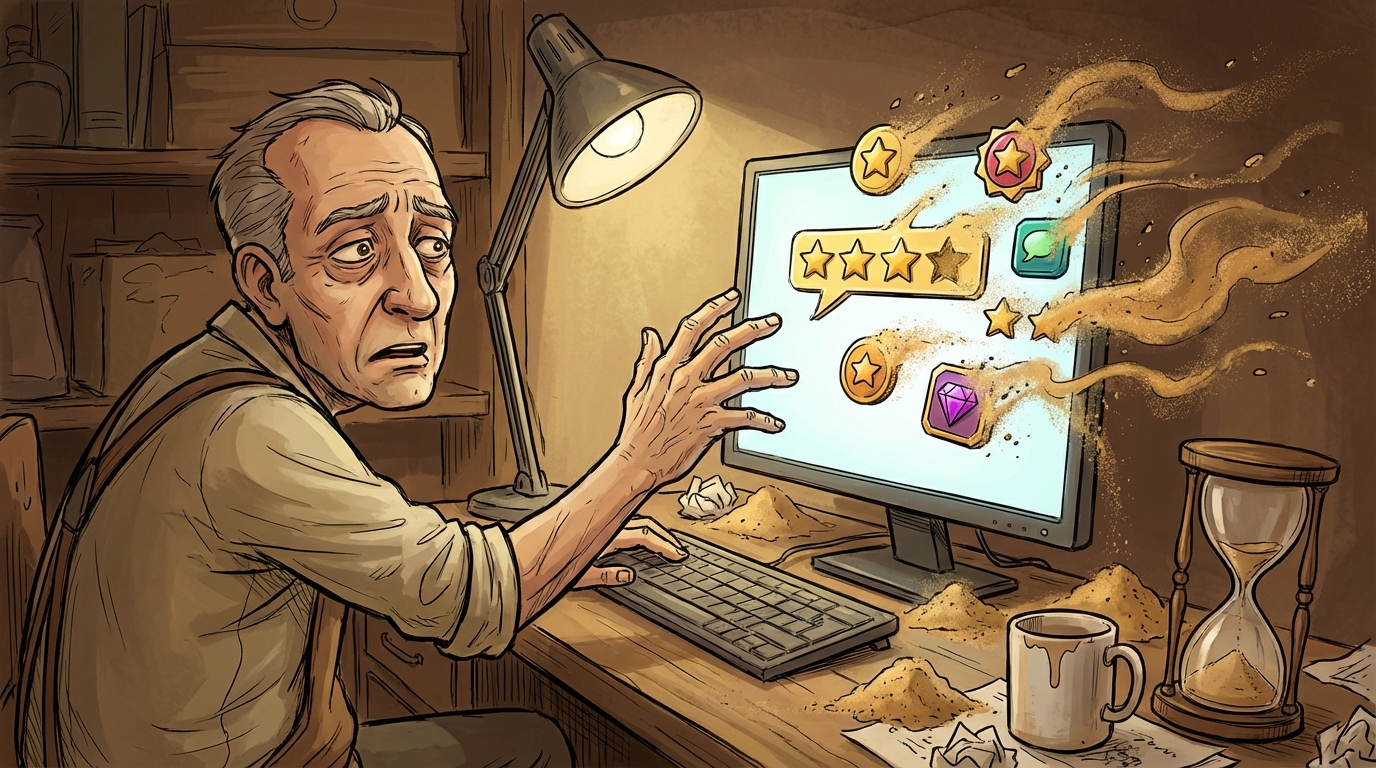
Shopify purged reviews and some apps lost 40% of their social proof overnight. This is why you need owned channels.
TL;DR
Shopify purged reviews and some apps lost up to 40% of their social proof overnight. This wasn’t malicious but it shows the risk of building entirely on platforms you don’t control. The solution isn’t abandoning platforms but building direct relationships with users through owned channels like email lists so your business can survive platform changes.
Who This Is For
Shopify app developers and SaaS founders who rely heavily on platform social proof and haven’t built direct relationships with their users outside the platform.
The Core Problem
Your entire social proof and user base sits on a platform that can change the rules, remove features, or purge data without warning. When that happens, you have no backup channel to reach users or rebuild trust.
Last week, Shopify did something.
They purged reviews.
Some apps lost up to 40% of their social proof. Just gone. Overnight.
Imagine waking up to that. Years of five-star reviews. Hundreds of testimonials proving your app works. The social proof that convinced merchants to install.
Deleted.
What Actually Happened
Shopify ran a cleanup. Old reviews from uninstalled merchants. Reviews from stores that closed. Reviews that violated policies in ways the app developers never knew about.
The intention wasn’t malicious. They were trying to improve quality. Remove stale reviews. Keep things current.
But the result was the same. Apps that had 500 reviews suddenly had 100. Apps that had carefully built social proof over years lost it in a day.
And there was no warning. No appeal process. No way to get them back.
The Rented Land Problem
You built your business on someone else’s platform.
That’s fine. That’s necessary. The Shopify App Store is where merchants discover apps. You have to be there.
But if that’s your only channel, you’re vulnerable.
The platform controls your visibility. Your social proof. Your access to users. Your entire business distribution depends on decisions someone else makes.
This isn’t theoretical. We see it constantly.
LinkedIn changes the algorithm. Your reach drops by half overnight.
Twitter suspends accounts. Years of audience building gone.
Google adjusts search rankings. Traffic disappears.
Shopify purges reviews. Your social proof vanishes.
You’re building on rented land. The landlord can change the terms whenever they want.
Why This Keeps Happening
Platforms optimize for platforms, not for you.
Shopify’s incentive is a quality App Store that serves merchants. If they think old reviews hurt quality, they’ll remove them. Your individual business impact doesn’t factor into that decision.
LinkedIn’s incentive is engagement and ad revenue. If they think showing your posts less increases those metrics, they’ll do it. Your reach doesn’t matter to them.
Every platform prioritizes platform health over individual user success. That’s rational for them. But it’s terrible for you.
The mistake founders make is thinking the platform cares about their success because the platform enables their success. These are different things.
Platforms enable success as a side effect of optimizing the platform. When those incentives diverge, you lose.
The Direct Relationship Solution
The answer isn’t abandoning platforms. You need them for discovery and growth.
The answer is building direct relationships alongside platform presence.
That means owned channels. Email lists. Direct communication with users that doesn’t depend on platform algorithms or policies.
When Shopify purges reviews, you can email your user base. Tell them what happened. Ask for new reviews. Rebuild social proof through direct outreach.
When LinkedIn nukes your reach, you can email your audience. Direct them to other platforms. Maintain the relationship outside LinkedIn’s control.
When any platform changes rules, you have a backup channel.
This isn’t paranoia. This is basic business resilience.
What Direct Relationships Look Like
For a Shopify app, direct relationships mean:
- Email list of installed merchants
- Communication that doesn’t only go through Shopify
- Regular touchpoints that build trust beyond the listing
- Ways to reach users if the app gets suspended or delisted
For a SaaS product:
- Email list separate from product notifications
- Content that provides value outside the product
- Community or group that exists independent of your platform
- Ways to maintain relationships if the product changes
The pattern is the same: don’t let a platform be your only line to users.
The Retention Angle
Direct relationships aren’t just about surviving platform changes. They’re about retention.
When you can talk to users directly, you can:
- Announce new features before they see them in-app
- Get feedback before making changes
- Understand why they’re churning before they leave
- Win back users who’ve uninstalled
- Turn users into advocates who leave new reviews
The apps that survived the Shopify review purge best were the ones who could email their user base and say “hey, we lost reviews, here’s what happened, if you’re still happy with our app we’d appreciate a fresh review.”
The apps who only had platform communication had no way to explain or rebuild.
The Lead Magnet Strategy
One way to build this is through lead magnets.
Not just for acquisition. For retention.
Offer something valuable to users. A guide. A template. A tool. Something they want that requires giving you their email.
Now you have a direct line. You can communicate outside the app. You can provide value beyond the core product. You can maintain the relationship even if platform dynamics change.
This works for both acquiring new users and deepening relationships with existing ones.
When platform changes happen, you have multiple ways to reach people. When you need feedback, you can ask directly. When you want to announce something, you don’t rely on in-app notifications alone.
The LinkedIn Example
I ran a lead magnet a while back. Hit 100,000 impressions. Added hundreds to my email list. Gained 600 followers.
The impressions were platform-dependent. LinkedIn could have killed that reach at any time.
But the email adds were mine. Those relationships don’t depend on LinkedIn’s algorithm. They exist outside the platform.
If LinkedIn changes tomorrow, I can still reach those people. If my account gets suspended, I don’t lose them.
That’s the difference between platform relationships and direct relationships.
Building This in Practice
Start with the simplest owned channel: email.
If you’re running a Shopify app:
- Collect emails during onboarding (with permission)
- Send regular valuable content, not just product updates
- Build the relationship outside Shopify’s communication channels
- Make sure you can reach users if anything happens to the app
If you’re running any SaaS:
- Don’t rely on in-app notifications alone
- Create content users want outside the product
- Build a list of people who care about the problems you solve
- Maintain communication that adds value beyond features
The goal is simple: if the platform changes rules tomorrow, can you still reach your users?
If no, fix that.
The Cost of Ignoring This
Apps that lost 40% of their reviews saw installs drop. Merchants trust social proof. When it disappears, conversion rates tank.
Some of those apps will recover. The ones who can reach their existing users and ask for fresh reviews. The ones who have direct relationships.
The ones who built entirely on platform social proof with no direct user communication? They’re struggling. They’re waiting for organic recovery that might not come.
The difference is owned channels. The apps who built them can respond. The apps who didn’t are stuck.
The Retention Insight
Here’s what founders miss: direct communication isn’t just insurance against platform changes.
It’s better retention.
Users who feel connected to you beyond the product stick around longer. They give better feedback. They’re more forgiving of bugs. They become advocates.
Users who only interact with your product through the platform are transactional. They’ll churn when something better appears. They won’t tell you why they’re leaving. They won’t defend you when someone complains.
Direct relationships change the dynamic. You’re not just a tool they use. You’re people they know.
That’s worth building even if platforms never change their rules.
The Acquisition Bonus
And here’s the kicker: direct relationships help acquisition too.
Users with direct communication channels become referrers. They tell colleagues. They leave better reviews. They create word-of-mouth that platforms can’t control.
Lead magnets that build your list also drive platform visibility. Content that provides value attracts new users who then become direct relationships.
You’re not choosing between platform presence and direct relationships. You’re building both and making each stronger.
Frequently Asked Questions
Don’t users hate getting added to email lists?
Only if you don’t provide value. If you’re just promoting your product, yes, they’ll unsubscribe. But if you’re sending genuinely useful content that helps them succeed, they’ll stay. The key is treating email as a value channel, not just a marketing channel. Teach them things. Share insights. Make the email worth reading.
How do I get users to give me their email if they’ve already installed?
Offer something valuable in exchange. An advanced guide. Exclusive features. Early access to new capabilities. Priority support. Something that makes giving you their email feel like a good trade. Don’t make it feel extractive. Make it feel like an upgrade.
Won’t Shopify get upset if I communicate with users outside their platform?
As long as you’re not violating terms of service, you’re fine. Having your own user communication channels is normal business practice. Just make sure you’re getting proper permission during onboarding and following anti-spam laws. Shopify expects apps to build user relationships, they just don’t want you spamming merchants.
What if I don’t have resources for regular email content?
Start small. One monthly email that shares a useful tip or insight. You don’t need a complex content strategy. You just need consistent communication that adds value. As you grow and see the benefit, you can invest more. The important thing is having the channel open, not sending daily emails.
Can I recover from platform changes even without direct relationships?
Sometimes. But it’s much harder and takes much longer. When Shopify purged reviews, apps with direct user communication recovered in weeks. Apps without it are still struggling months later. The owned channel is force multiplication for recovery. Without it, you’re relying entirely on platform algorithms to rebuild, which is slow and unpredictable.
Key Takeaways
-
Platform social proof can disappear overnight: Shopify’s review purge showed that building entirely on platform trust signals is risky—you need owned channels that survive platform policy changes.
-
Direct relationships enable faster recovery: Apps that could email users directly rebuilt social proof in weeks; apps that only had platform communication are still struggling because they have no way to ask for help.
-
Owned channels improve retention beyond crisis: Users with direct communication channels stick around longer, give better feedback, and become advocates—the value extends far beyond surviving platform changes.
If you’re reading this and thinking “I should probably build an email list,” you’re right.
If you’re thinking “my social proof could disappear tomorrow and I’d have no way to reach users,” fix that.
Building on platforms is necessary. Building only on platforms is dangerous.
You don’t need a complex strategy. You just need one owned channel where you can reach users directly.
Start with email. Offer something valuable. Get permission. Send useful content regularly.
Do this before a platform change forces you to.
Because when your reviews disappear overnight, or your reach drops to zero, or your account gets suspended, having a way to reach your users is the difference between recovering and failing.
Build on platforms. But own your relationships.
Ohad Michaeli
Strategic positioning for Shopify apps
Want more insights like this?
Join Shopify app founders who get actionable positioning and optimization strategies.