Why More Features Kills Your Shopify App's Growth
Most apps don't fail from lack of features. They fail from lack of clarity. Here's why saying no is your best growth strategy.
There’s a pattern I see in almost every Shopify app audit I do.
The founder walks me through their app. Feature after feature. Integration after integration. They’ve built something genuinely impressive. The codebase is solid. The functionality is deep.
And their listing is a mess.
Not because the copy is bad. Because they’re trying to communicate everything at once. To everyone. In 300 words.
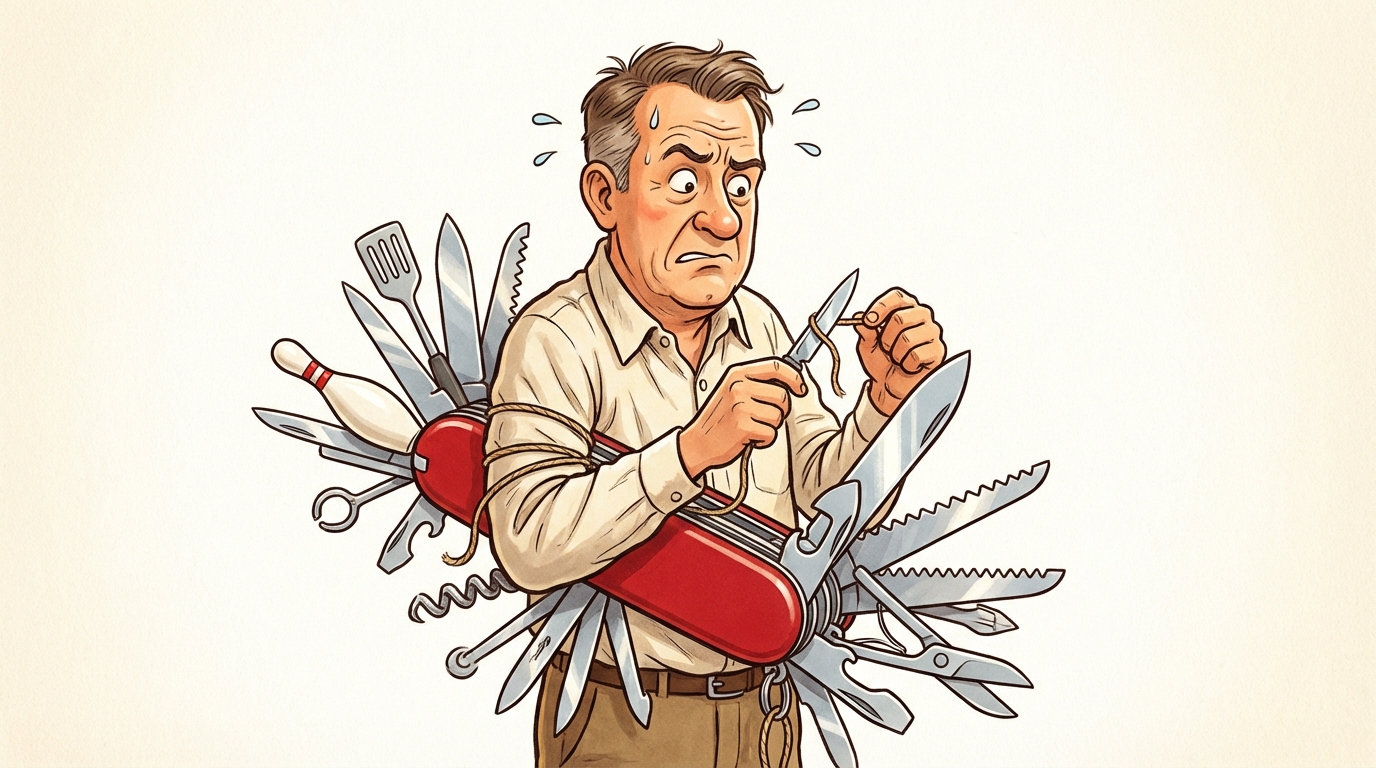
The Swiss Army Knife Problem
When you build a lot of features, you naturally want to talk about all of them. Makes sense. You put in the work. You want merchants to know what they’re getting.
But here’s what actually happens.
A merchant lands on your listing. They’ve got 30 seconds. Maybe less. They’re scanning, not reading. They need to understand: Is this for me? Does it solve my problem?
And your listing says: “We do upsells AND cross-sells AND bundles AND recommendations AND analytics AND A/B testing AND…”
The merchant’s brain checks out. Not because they don’t need those things. Because they can’t figure out which thing you actually do well.
Customers Want Solutions, Not Options
Merchants aren’t shopping for features. They’re shopping for solutions to specific problems.
“My checkout page doesn’t convert” is a problem. “I need more revenue per order” is a problem. “Customers leave without buying anything else” is a problem.
“I need an app that does upsells, cross-sells, bundles, recommendations, and analytics” is not how anyone thinks.
When your listing tries to be everything, you end up resonating with no one. The merchant with a checkout conversion problem scrolls past because you didn’t lead with checkout conversion. The merchant who wants bundle functionality can’t tell if you’re primarily a bundle app or if bundles are a side feature.
You lose both of them to apps with clearer positioning.
The Focus Advantage
The apps that dominate their categories aren’t necessarily the ones with the most features. They’re the ones with the clearest positioning.
Look at the top apps in any Shopify category. They lead with one thing. One clear benefit. One specific problem they solve.
Their listings don’t say “We do everything.” They say “We solve this problem. Really well. Better than anything else.”
That clarity compounds. Clear positioning leads to better-fit customers. Better-fit customers lead to better reviews. Better reviews lead to better rankings. Better rankings lead to more of the right customers.
The opposite also compounds. Unclear positioning attracts tire-kickers. Tire-kickers don’t convert, or they convert and churn. Low conversion and high churn hurt your metrics. Bad metrics hurt your visibility.
What Saying No Actually Means
This doesn’t mean you need to delete features. It means you need to be intentional about what you lead with.
Your listing is not a feature list. It’s a positioning statement. It answers the question: “What does this app actually do for me?”
That answer should be:
- Specific enough that the right merchant immediately gets it
- Focused enough that it doesn’t require mental sorting
- Clear enough that it can be understood in seconds
Everything else is supporting detail. It’s there for merchants who want to dig deeper. But it’s not the headline. It’s not the first thing they see.
The Bi-Weekly Webinar Approach
Here’s something that works: run bi-weekly webinars with your existing users.
Not sales webinars. Support webinars. Help users with your app. Demonstrate the features that actually matter. Show them how to succeed. Answer their questions.
Two things happen:
First, you learn what features actually matter to the people using your app. Not the features you think matter. The ones they actually use.
Second, you hear how they describe your app. Not in your language. In their language. That language is gold for your positioning.
The patterns that emerge from these conversations tell you exactly what to lead with. Your users will literally tell you what makes your app valuable to them.
Your Best Feature Is Saying No
Every feature you don’t highlight makes the features you do highlight clearer.
Every benefit you don’t mention makes the benefits you do mention more memorable.
Every customer you don’t try to attract makes the customers you do attract more likely to convert.
Constraints are a feature, not a bug.
The apps that grow aren’t the ones that do the most. They’re the ones that communicate what they do most clearly.
That clarity starts with the willingness to say no. To features. To use cases. To customer segments that aren’t a perfect fit.
Your app doesn’t need to do more. It needs merchants to understand what it already does.
That’s a positioning problem, not a product problem. And positioning problems get solved by focus, not features.
Ohad Michaeli
Strategic positioning for Shopify apps
Want more insights like this?
Join Shopify app founders who get actionable positioning and optimization strategies.