Why Customers Leave (and How to Keep Them)
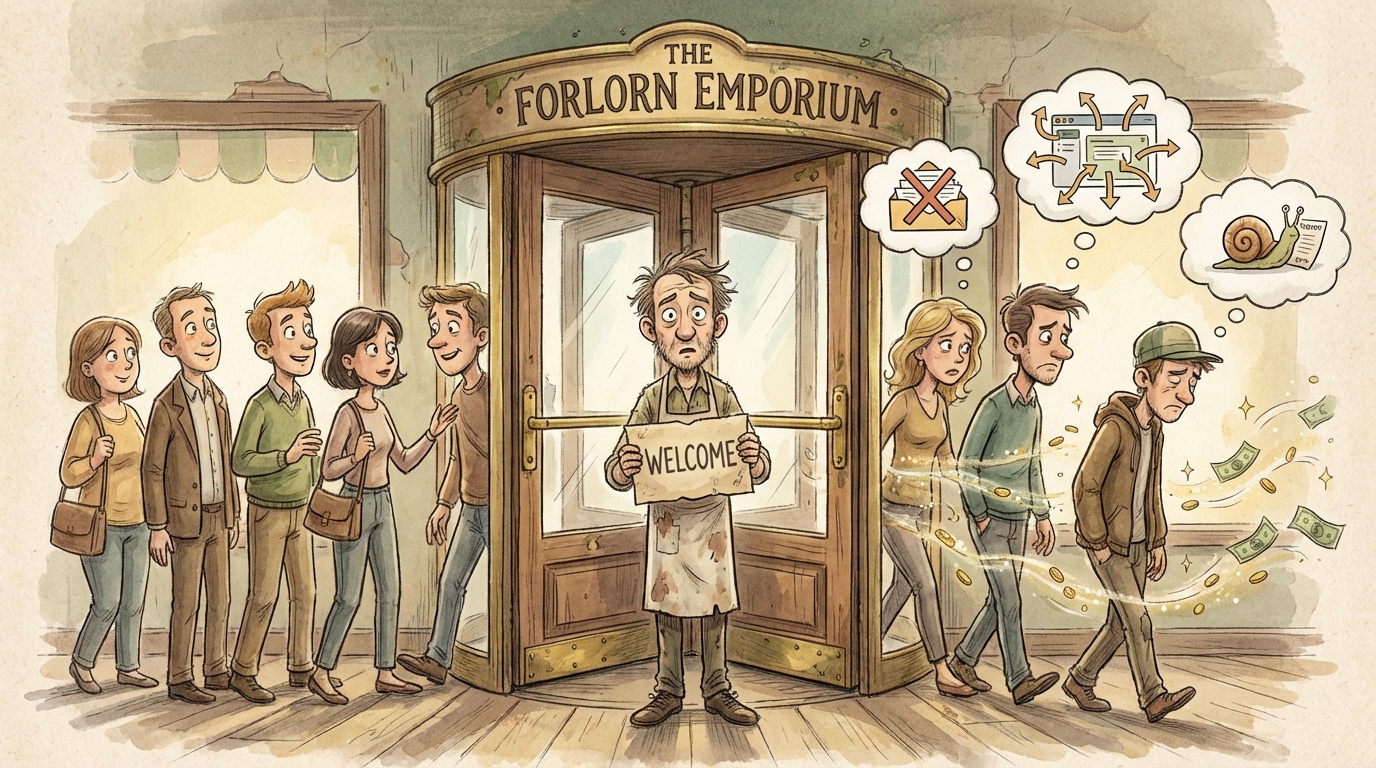
No one cancels a product that's clearly making them money. They cancel products whose value they've forgotten.
TL;DR
Customers don’t cancel good products—they cancel products whose value they’ve forgotten. Retention isn’t just about having a great product. It’s about making sure your customers recognize your impact every single day through clear metrics, visual proof, and constant reinforcement.
Who This Is For
SaaS founders who have a solid product but are losing customers they shouldn’t be losing.
The Core Problem
Your product delivers value, but your customers don’t see it. If they can’t measure your impact, they’ll forget why they’re paying you. And forgotten value is canceled value.
No one cancels a product that’s clearly making them money or saving them time.
They cancel products whose value they’ve forgotten.
It’s brutal but true.
The Forgetting Problem
Your product might be working perfectly.
Saving your customer hours every week. Preventing problems they don’t even know about. Making their business run smoother in ways they’ve stopped noticing.
But if they can’t see that value, it doesn’t matter.
Because when the subscription renewal email shows up, they’re not thinking about all the silent ways your product helped them.
They’re thinking “do I really need this?”
And if they can’t immediately answer “yes, because it does X for me,” you’re at risk.
Why Good Products Get Canceled
Think about the products you use consistently.
The ones you would never cancel. The ones where you see the renewal charge and think “yeah, worth it.”
They probably make it obvious that your life or business is better because of them.
Your email client shows you how many messages it filtered out. Your analytics tool shows you traffic growth. Your backup service reminds you it just saved 47GB of data.
They’re not subtle about their value. They put it in your face.
Now think about the products you’ve canceled.
Were they bad products? Maybe not.
Maybe they were working fine. But you stopped seeing what they were doing for you. So when the renewal came up, you thought “I’m not sure I need this anymore.”
The product didn’t fail. The value communication failed.
Retention Is a Visibility Problem
Most SaaS founders think retention is about product quality.
Build a great product and customers will stay. Fix bugs quickly. Add features they request.
All important. But not sufficient.
Because you can have the best product in the world, and if customers forget why they installed it, they’ll still churn.
Retention is about making sure your customers recognize your impact every single day.
Not just delivering value. Showing value. Making it impossible to forget what you do for them.
How to Make Value Visible
Show the numbers.
Give them clear metrics. How much money did they save this month? How many hours did they reclaim? How many customers did they gain? How many problems did you prevent?
Numbers are concrete. “Your app saved you 8 hours this week” is more powerful than “we help you save time.”
If you can measure your impact, measure it. If you can quantify your value, quantify it.
And then put those numbers where your customers see them. Dashboard. Email. Notifications.
Don’t make them dig for proof that you’re working. Show them constantly.
Visual proof matters.
Graphs. Growth curves. Impact stats. Green numbers going up. Red numbers going down.
Humans are visual. We respond to charts more than we respond to text.
If your product improves conversion rates, show a graph of conversion improving. If it reduces support tickets, show tickets declining over time. If it increases revenue, show the revenue trend.
Make it green when things are good. Make it red when things need attention. Make it obvious whether your product is helping or not.
Your customers should glance at your dashboard and immediately feel good about paying you.
Constant reinforcement.
Every dashboard login should reinforce why they’re smart for sticking around.
Every email update should highlight something you did for them this week.
Every notification should remind them of a problem you just prevented.
You’re not being annoying. You’re being clear about your value.
Because if you don’t tell them what you’re doing for them, they’ll forget. And forgotten value is canceled value.
What This Looks Like in Practice
I worked with a Shopify app that helped merchants recover abandoned carts.
Good product. Solid conversion rates. But churn was higher than it should be.
I looked at their dashboard. Bunch of settings. Some stats buried in a submenu. Nothing that immediately communicated value.
We redesigned it.
Now when a merchant logs in, the first thing they see is: “We recovered $847 in abandoned carts this week.”
Big number. Front and center. Impossible to miss.
Below that, a graph showing recovered revenue over time. Then a breakdown: “23 recovered carts. 18 purchases. $847 in revenue you would have lost.”
Nothing changed about the product. It was recovering the same carts before.
But now merchants saw it. They felt it. They logged in and thought “this app just made me $847.”
Churn dropped significantly.
Not because the product got better. Because the value became visible.
When Customers Don’t See Impact
If your customers aren’t seeing your impact, they’re probably thinking one of three things:
“I’m not sure this is working.”
Your product is working. But they can’t tell. So they assume it’s not doing much.
Fix: Show them. Dashboard stats. Email summaries. Notifications. Make it impossible to miss.
“I’m paying for this and not using it.”
Maybe they’re not using every feature. But they’re definitely getting value from the features they do use.
Fix: Stop tracking “usage” and start tracking “impact.” Don’t show them how many times they logged in. Show them what you did for their business.
“I don’t remember why I installed this.”
They had a problem. You solved it. But that was six months ago and they’ve forgotten.
Fix: Remind them. Regularly. “You installed us to solve X. Here’s how much we’ve solved it this month.”
The Renewal Moment
The moment your customer gets that renewal email is when retention is won or lost.
They see the charge coming up. They think “is this worth it?”
If they can immediately recall specific value you delivered this week, this month, this quarter—you’re safe.
If they have to think about it, or dig through their account to remember what you do, you’re at risk.
Your job is to make that answer instant.
“Am I getting value from this?”
“Yes, they saved me $2,400 last month.”
“Yes, they’ve recovered 47 abandoned carts this week.”
“Yes, I haven’t had a data loss issue since I started using them.”
Instant recall. That’s what keeps customers paying.
What to Add Right Now
Look at your product dashboard. Right now.
What’s the first thing your customers see when they log in?
Is it a graph showing their success? Or is it a settings menu?
Is it a big number highlighting impact? Or is it a list of features they can configure?
Is it obvious they’re getting value? Or do they have to hunt for proof?
If it’s not immediately clear that your product is working for them, you have a retention problem waiting to happen.
Start today: What’s one thing you can add right now to remind your customers exactly how much value they’re getting?
A simple email once a week: “You saved X hours this week using our product.”
A dashboard widget: “We’ve prevented X problems for you this month.”
A monthly summary: “Here’s what we accomplished together this month.”
Pick one thing. Add it this week.
And watch what happens to your churn rate.
When Value Is Genuinely Low
Sometimes customers cancel because they’re genuinely not getting value.
Maybe they’re not set up correctly. Maybe they’re not the right fit. Maybe they signed up but never really onboarded.
Showing metrics won’t fix that. You need activation, not visibility.
But if your product is delivering value and customers are still churning, visibility is probably your problem.
They’re getting value. They’re just not seeing it.
And if they’re not seeing it, they’re not staying.
Frequently Asked Questions
Won’t constantly reminding customers about value feel like bragging?
No. Customers want to know they’re making a smart decision by paying you. Showing them concrete proof isn’t bragging—it’s helping them feel confident in their choice.
What if our product prevents problems rather than creates wins?
Then show the problems you prevented. “We blocked 47 fraudulent transactions this month” or “Zero downtime incidents this quarter.” Prevented problems are still value.
How often should we communicate value without being annoying?
As often as you have something real to show. Weekly dashboard updates are fine. Monthly email summaries work well. What’s annoying is empty updates with no actual value to report.
What if our metrics aren’t impressive yet because they just started using the product?
Show trajectory, not absolutes. “You recovered $120 in your first week—customers typically reach $400/week by month two” shows momentum even if the current number is small.
Should we show value comparisons against other customers?
Carefully. “You’re in the top 20% of users” can motivate. But “you’re below average” can demotivate. Focus on their own growth and improvement over time, not comparison to others.
Key Takeaways
- Forgotten value is canceled value: No one cancels products clearly making them money. They cancel products whose value they’ve stopped noticing.
- Make impact impossible to miss: Dashboard numbers, visual graphs, and regular reinforcement keep value front-of-mind during renewal decisions.
- Show, don’t assume: Your product might be working perfectly, but if customers can’t see the impact, it doesn’t matter. Make value visible every single day.
What’s one thing you can add today to remind your customers exactly how much value they’re getting? Reply to this post and let me know—I’ll feature the best answers in my next email.
Ohad Michaeli
Strategic positioning for Shopify apps
Want more insights like this?
Join Shopify app founders who get actionable positioning and optimization strategies.